What if Iceland leaped into a superheated future?
Utilisation of high-temperature geothermal areas – what is the current status?
Supercritical geothermal energy, which is even hotter and more energy-rich than what is currently utilized in geothermal steam power plants, has been a subject of research for some time. It has been drilled for, but various challenges must be overcome before it can be harnessed. Innovation is needed to harness this immense energy, which is widely available at accessible depths here on the volcanic island of Iceland. COMPASS is the name of an innovation project in this field. It is funded by the European Union and involves key players in this area.
During the recent Innovation Week, a side event was held at the Orkuveitan community center in sunny Elliðaárdalur, focusing on the utilization of superhot geothermal resources. Orkuveitan, Orka náttúrunnar, and GEORG, in collaboration with the COMPASS project, organized a project status meeting, a summer school, and a workshop on the use of superhot geothermal energy, where foam cement and the Casing-Saver were featured.
Great turnout – lots of interest
The discussion on the utilization of supercritical geothermal heat on Friday brought together most of those who possess the greatest knowledge on the subject and have been at the forefront of our, the Icelanders', development in harnessing the immense power that resides in even hotter rock than we have managed to utilize to date. There was great interest in the discussions, and the attendance at the panels and in the hall exceeded all expectations. Innovation at the outermost edge of knowledge here brings together universities, research centers, consultants, entrepreneurs, and the energy companies in Iceland, in addition to utilizing connections with research being conducted abroad.
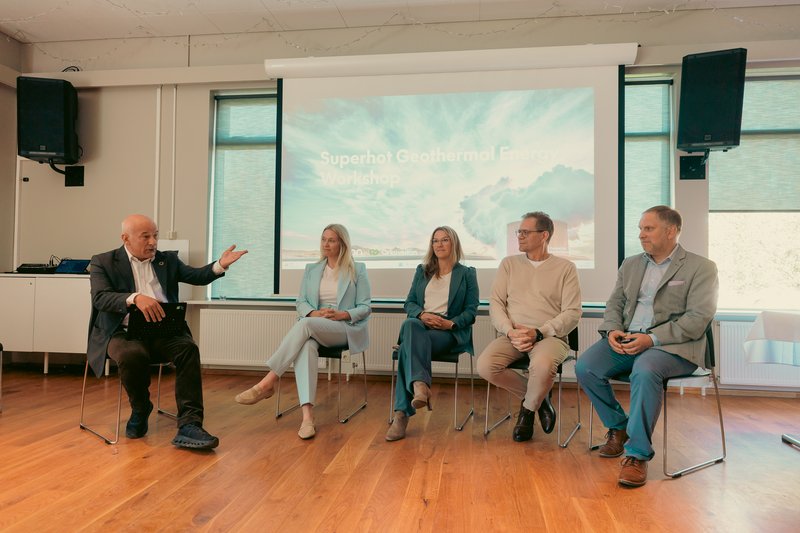
Eiríkur Hjálmarsson leads a discussion with Lilja Magnúsdóttir from HS Orka, Hera Grímsdóttir from Orkuveitan, and Árni Magnússon from ÍSOR and Bjarni Pálsson at Landsvirkjun.
A panel discussion with representatives from the companies HS Orka, Orkuveitan, ÍSOR, and Landsvirkjun discussed ways to advance supercritical geothermal energy in Iceland. Bjarni Pálsson from Landsvirkjun was the first to speak: “The fact that two wells have already been drilled is incredibly important, but a similar methodology was used for both, and similar problems were encountered. Now is therefore the perfect time to pause and change course, and the COMPASS project is precisely about addressing the key issues we ran into.” Eiríkur Hjálmarsson then turned the discussion over to Hera Grímsdóttir from Orkuveitan; “Yes, we have been working to minimize uncertainty before embarking on drilling the third deep well and have strengthened cooperation both within and outside the country to better investigate the uncertainties. This material can be researched extensively, but at some point, it comes down to comparing risk and reward and drilling if the answer is yes.”
May I have the increased attention of the government
Lilja Magnúsdóttir from HS Orka mentioned that IDDP-2, the second phase of the Iceland Deep Drilling Project, has proven the existence of supercritical heat. However, she notes that how we intend to achieve our energy utilization goals depends on government policy. Energy prices will likely increase in the future as more expensive energy resources are generally being utilized. Currently, deep drilling is an expensive project that could become cost-effective in the near future. Árni Magnússon from ÍSOR mentions that the deep drilling project is 25 years old, yet we still know very little about the volcanic zones and the high temperatures that could be accessed there. Research has been led by the initiative of the energy companies, but funding and attention from the government could be crucial in increasing our knowledge of this resource.
The entire panel agreed that the utilization of supercritical geothermal energy presents significant opportunities and that it is advisable for the government to ensure access to funds for deep utilization, as this is a necessary step to better harness Iceland's geothermal resources. Many countries are also looking for ways to utilize supercritical geothermal energy, but the opportunity to be a global leader in this field still exists.
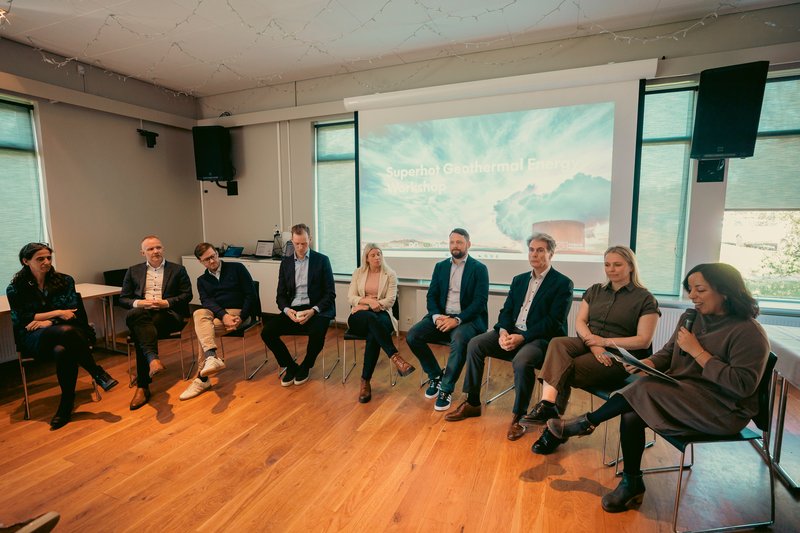
Amal Barich leads discussions for Carine Chateney at Verkís, Björn Þór Guðmundsson at KMT, Sigurður Markússon at GEORG and Orkuveitan, Yngvi Guðmundsson at HS Orka, Sigrún Nanna Karlsdóttir at the University of Iceland and Gerosion, Gunnar S Kaldal at ÍSOR, Kristinn Ingason at COWI, and María S Guðjónsdóttir at Reykjavík University.
Challenges in design
In a panel discussion with representatives from Verkís, COWI, KMT, Orkuveitan, GEORG, HS Orka, the University of Iceland, Gerosion, ÍSOR, and Reykjavik University, topics included the challenges related to technological development for supercritical utilization, how COMPASS supports this development, and how to improve collaboration and information flow, especially to the public. Kristinn Ingason emphasized the importance of the wellhead control valve and its design in addition to the development within COMPASS. He noted that although solutions for utilizing supercritical geothermal layers are still in development, drilling should continue.
Yngvi Guðmundsson agreed and spoke about the importance of testing things out. Drilling one well in 10 years is not enough to ensure rapid development. To attract investors, you need to show wells that have been in operation for several years, but to achieve that, the emphasis must be on drilling more wells. Such an increase would support development, and Sigurður Markússon added that we need to create conditions that allow for further experimentation. Björn Þór Guðmundsson spoke about the unique position Iceland has to lead this development and the need to work systematically towards being a leader, because otherwise we will fall behind. Gunnar Skúlason Kaldal and Sigrún Nanna Karlsdóttir discussed the importance of learning from past experience regarding well design. The challenges are related to, among other things, corrosion and expansion in the well casing. It is necessary to look at the different conditions a well encounters during heating and cooling and design the well based on the whole picture. "We have to work with what we have," said Gunnar.
Sigrún spoke about the importance of projects and that development, but also noted that you don't always have to reinvent the wheel. “For example, there has been a lot of progress in the houses (e. claddings) recent years that would be ideal to test for this kind of environment. There is a great deal of interest in supercritical utilization possibilities, especially in the United States, and we should harness that momentum.”
Cooperation must be strengthened
Amel Barich shifted the discussion to collaboration, knowledge sharing, and community engagement. María S. Guðjónsdóttir discussed the lack of knowledge we face in this environment. It would therefore be important to strengthen collaboration between different sectors, and she reminded us that even if the final goal has not been reached, we always learn something that will be useful going forward. We can be at the forefront, but we need to work closely with other countries and share our knowledge. Sigurður agreed that we should seek out knowledge that has been built up in other industries, such as the oil and gas industry. The public quickly loses interest if things don't succeed immediately, and it needs to be clear that this is a long-term project that supports other renewable energy solutions.
Carine Chateney highlighted the importance of maintaining good and open communication with the public. This is essential for the country's energy security. Geothermal energy has improved the quality of life in Iceland and can continue to do so in the future with the right support. Yngvi noted that the geothermal sector needed to be more decisive to drive this development forward, and María offered the final reflections: “100 years ago, a district heating system was established in Iceland. It was expensive, risky, and time-consuming. Where would we be today if we hadn't taken that leap? What do we want to leave behind for future generations?”
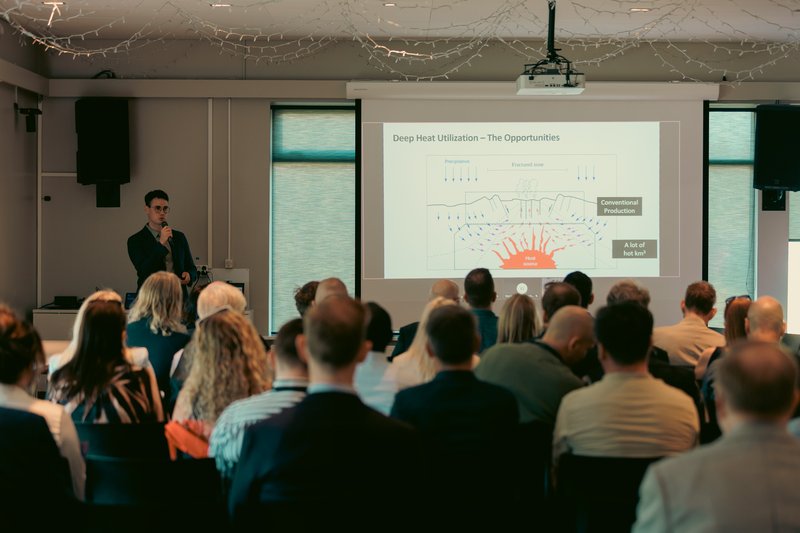
Pálmar Sigurðsson from Orkuveitan discusses the opportunities inherent in the utilization of superheated steam.
The event also covered the opportunities inherent in harnessing superheated steam for electricity and heat production. Orkuveitan and Orka náttúrunnar envision researching the possibilities of utilizing the geothermal areas currently being used for energy production even more effectively through these methods.
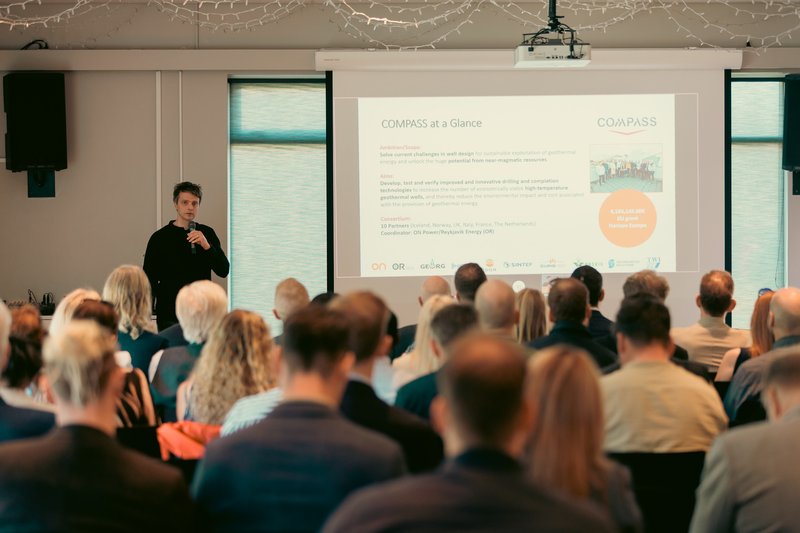
Andri Ísak Þórhallsson from the University of Iceland and Orkuveitan will inform attendees about the main research of the COMPASS project.
Foam cement and liner hanger
The event also delved deeper into the COMPASS research project, which has received a European grant from the Horizon Europe fund to research the reinforcement of deep wells. The challenges in the deep drilling project in the IDDP-1 and IDDP-2 wells prompted further research into cement and casings. To this end, COMPASS involves a collaboration between Orkuveitan and Orka náttúrunnar with numerous companies and research centers in Norway, France, the UK, the Netherlands, and Italy, among others. Research is being conducted on foam cement, casing coatings, and ÍSOR's "casing liberator," as well as the interplay of these factors under conditions as close to real well conditions as laboratory settings permit.
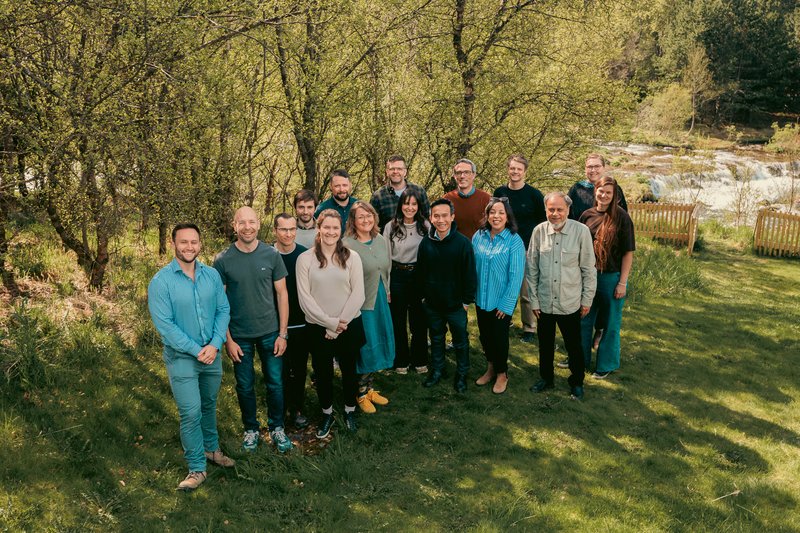
Researchers of the COMPASS project went over the status of the project.
A diverse group of researchers in COMPASS came together on Tuesday to review the project's status. Planning continued for research that will take place this summer in Orka náttúrunnar's areas, as well as in laboratories at the University of Iceland, in Norway, and in the UK. The companies involved in the COMPASS project are Orkuveitan, Orka náttúrunnar, GEORG, ÍSOR, TWI, HLC, SINTEF, TVS, COSVIG, and CURISTEC.
COMPASS Summer School
This week also saw the COMPASS Summer School, where lectures were given on the COMPASS research topic, along with a presentation on the history and purpose of research into the utilization of superheated geothermal steam for about 35 interested students from various corners of the world. The summer school was open to all applicants with a basic knowledge of the subject matter. A trip was also taken around the Reykjanes peninsula, where surface geothermal manifestations were examined and the IDDP-2 deep drilling well was visited, courtesy of HS Orka. The group was exceptionally pleased with the pizzas at Papa's in Grindavík.
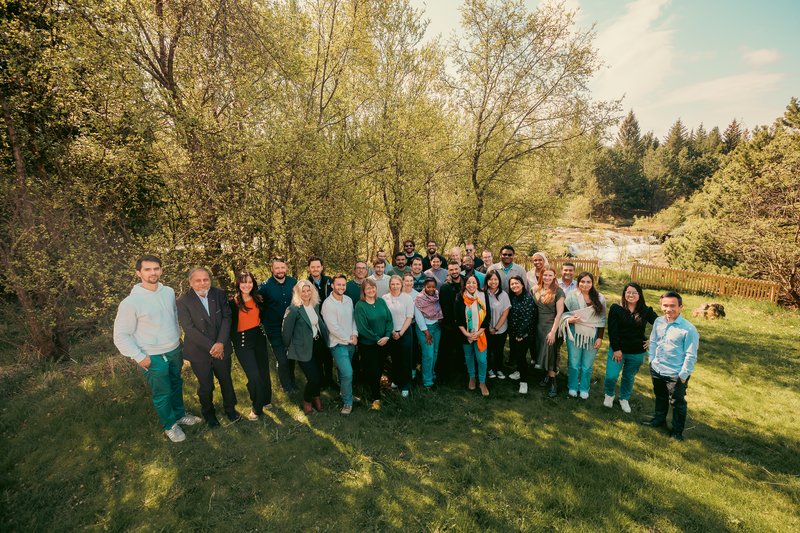
Handsome Group students and lecturers at the COMPASS summer school.
English / English
Charting the Future of Superhot Geothermal: Highlights from COMPASS Iceland Week
During the Icelandic Innovation Week, a side event was held at Orkuveitan’s community center in the sunny Elliðaárdalur valley, focusing on the utilization of superhot geothermal resources. Orkuveitan, ON Power, and GEORG jointly organized a project status meeting, a summer school, and a workshop on the use of superhot geothermal energy in collaboration with the rest of the COMPASS project consortium.
Most of the leading experts in the field, who have been at the forefront of Iceland’s efforts to harness the immense power found in even hotter rock than we have previously been able to utilize, participated in the discussions on Friday. Interest in the topic was high, and attendance at the panels and in the audience exceeded expectations. Innovation at the cutting edge of knowledge brought together universities, research centers, consultants, entrepreneurs, and energy companies in Iceland, while also leveraging connections to international research.
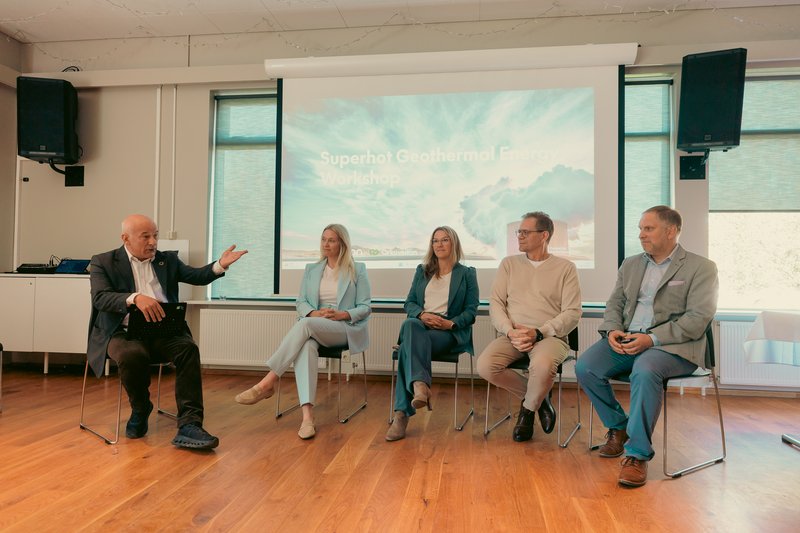
Eiríkur Hjálmarsson moderated a panel discussion featuring Lilja Magnúsdóttir from HS Orka, Hera Grímsdóttir from Orkuveitan, Árni Magnússon from ÍSOR, and Bjarni Pálsson from Landsvirkjun.
Panel Discussion on Superhot Geothermal – Future Prospects in Iceland
A panel composed of representatives from HS Orka, Orkuveitan, ÍSOR, and Landsvirkjun discussed pathways for advancing the utilization of superhot geothermal resources in Iceland. Bjarni Pálsson from Landsvirkjun spoke first:
"Having already drilled two wells is extremely important, but similar methodologies were used and similar challenges encountered. Now is a good time to pause and change course, and the COMPASS project is addressing key issues that have arisen in the previous wells."
Eiríkur Hjálmarsson then passed the discussion to Hera Grímsdóttir from Orkuveitan:
"Yes, we’ve been working to minimize uncertainty before proceeding with drilling a third deep well, and we’ve strengthened collaboration both domestically and internationally lake better investigate the uncertainties. There’s a lot that can be studied, but at some point, it comes down to weighing risk versus reward—and drilling if the answer is yes."
Lilja Magnúsdóttir from HS Orka noted that the IDDP-2 project confirmed the presence of superhot conditions, but emphasized that achieving energy utilization goals depends on government policy. She pointed out that energy prices are likely to rise in the future as more expensive energy resources are tapped, and while deep drilling is currently costly, it could become economically viable in the near future.
Árni Magnússon from ÍSOR added that the deep drilling project is 25 years old, yet we still know very little about the volcanic zones and high-temperature areas that could be accessed. Research has been driven by the initiative of energy companies, but government funding and attention could be crucial in expanding our knowledge of the resource.
All panelists agreed that superhot geothermal energy presents significant opportunities, and that it would be wise for the government to ensure access to funding for deep resource utilization. Many countries are exploring ways to harness superhot geothermal energy, but Iceland still has the opportunity to become a global leader in the field.
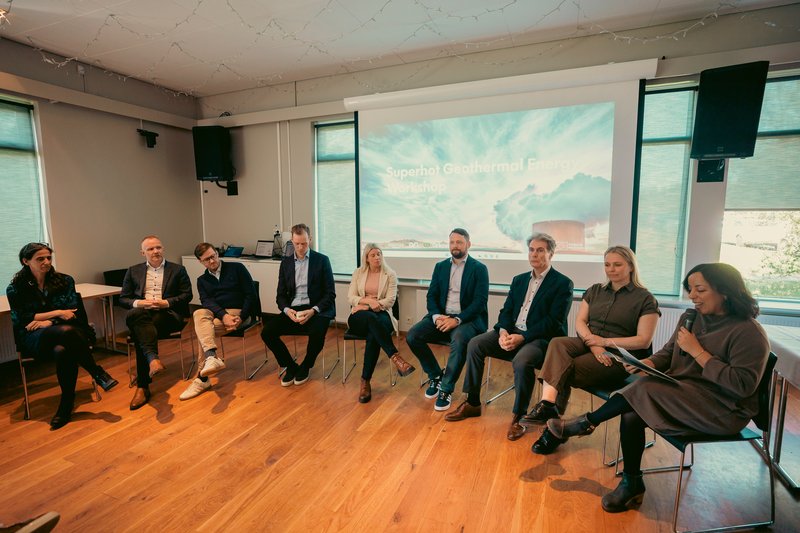
Hope Barich moderated a panel discussion featuring Carine Chateney from Verkís, Björn Þór Guðmundsson from KMT, Sigurður Markússon from GEORG and Orkuveitan, Yngvi Guðmundsson from HS Orka, Sigrún Nanna Karlsdóttir from the University of Iceland and Gerosion, Gunnar S. Kaldal from ÍSOR, Kristinn Ingason from COWI, and María S. Guðjónsdóttir from Reykjavik University.
Panel Discussion on Superhot Geothermal: Technology, Collaboration, and Public Engagement
A panel consisting of representatives from Verkís, COWI, KMT, GEORG, HS Orka, the University of Iceland, Gerosion, ÍSOR, and Reykjavik University discussed the challenges related to technological development for superhot geothermal utilization, how the COMPASS project supports progress, and how collaboration and information flow—especially with the public—can be improved.
Kristinn Ingason emphasized the importance of the wellhead valve and its design, in addition to the developments within COMPASS. He noted that although solutions for utilizing superheated geothermal formations are still in development, drilling should continue. Yngvi Guðmundsson agreed, stressing the importance of trial and error. Drilling one well every ten years is not enough to ensure rapid development. To attract investors, it’s necessary to demonstrate wells that have been in operation for several years, which requires a focus on drilling more wells. This increase would support development, and Sigurður Markússon added that we need to create conditions that allow for further experimentation.
Björn Þór Guðmundsson spoke about Iceland’s unique position to lead this development and the need to work systematically toward that goal—otherwise, we risk falling behind. Gunnar Skúlason Kaldal and Sigrún Nanna Karlsdóttir discussed the importance of learning from past experiences in well design. Challenges include corrosion and expansion in well casings. It’s essential to consider the different conditions a well encounters during heating and cooling and to design with the whole system in mind. “We have to work with what we’ve got,” said Gunnar. Sigrún emphasized the importance of ongoing projects and development but also noted that we don’t always need to reinvent the wheel:
"For example, there has been significant progress in cladding technologies in recent years, which would Hey ideal to test in this environment. There is strong interest in superhot geothermal potential, especially in the United States, and we should harness that momentum."
Amel Barich shifted the discussion toward collaboration, knowledge sharing, and community engagement. María S. Guðjónsdóttir spoke about the lack of knowledge we face in this environment. Strengthening collaboration across sectors is therefore crucial, and she reminded everyone that even if the ultimate goal hasn’t been reached, we always learn something valuable along the way. Iceland can be at the forefront, but we must work closely with other countries and share our knowledge.
Sigurður agreed, noting the value of drawing on expertise from other industries, such as oil and gas. The public can quickly lose interest if results aren’t immediate, so it must be clearly communicated that this is a long-term project that supports other renewable energy solutions. Carine Chateney emphasized the importance of maintaining good and open communication with the public. This development is essential for the country’s energy security. Geothermal energy has improved quality of life in Iceland and can continue to do so in the future with the right support.
Yngvi pointed out that the geothermal sector needs to be more assertive in driving this development forward. María concluded with a powerful reflection:
"A hundred years ago, Iceland established its first district heating system. It was expensive, risky, and time-consuming. Where would we be today if we hadn’t taken that leap? What legacy toilet we want to leave for future generations?"
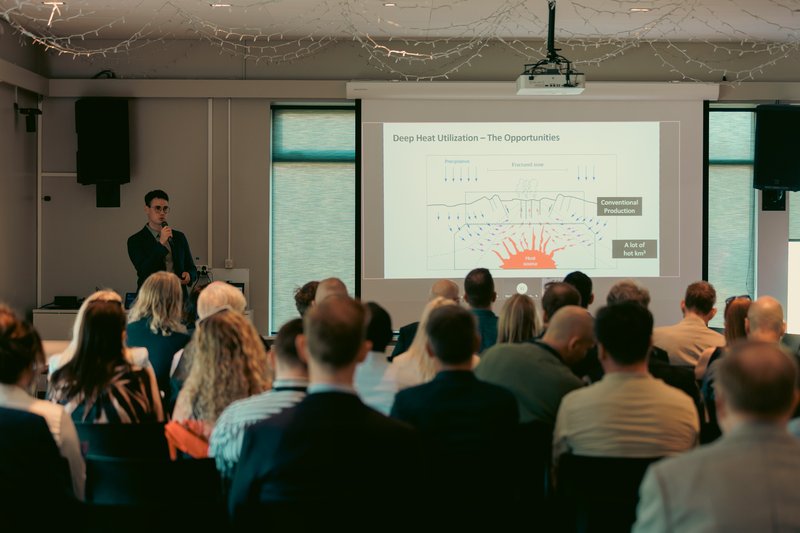
Pálmar Sigurðsson from Orkuveitan presented the opportunities associated with harnessing superhot steam for energy production.
Exploring the Potential of Superhot Steam for Power and Heat Production
The event also highlighted the opportunities associated with harnessing superhot steam for electricity and heat production. Orkuveitan and Orka náttúrunnar envision exploring the potential to utilize existing geothermal areas even more efficiently through these methods. The goal is to enhance the output from geothermal fields already in use by tapping into deeper, hotter resources.
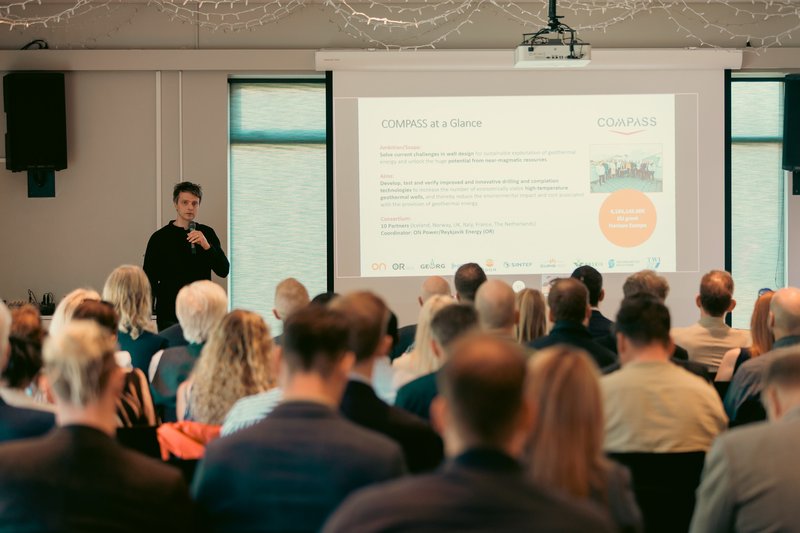
Andri Ísak Þórhallsson from the University of Iceland and Orkuveitan briefed attendees on the main research activities within the COMPASS project.
Deep Dive into the COMPASS Research Project
The event also delved deeper into the COMPASS research project, which has received European funding from the Horizon Europe fund to investigate the reinforcement of deep well infrastructure. Challenges encountered in the deep drilling projects at wells IDDP-1 and IDDP-2 prompted further research into cement and casing technologies.
Through COMPASS, Orkuveitan and ON Power are collaborating with numerous companies and research institutions across Europe—including in Norway, France, the UK, the Netherlands, and Italy. The research focuses on materials such as foamed cement, casing coatings, and ÍSOR’s annular pressure buildup relief solution, as well as the interaction of these components under conditions that closely simulate real well environments, as far as laboratory settings allow.
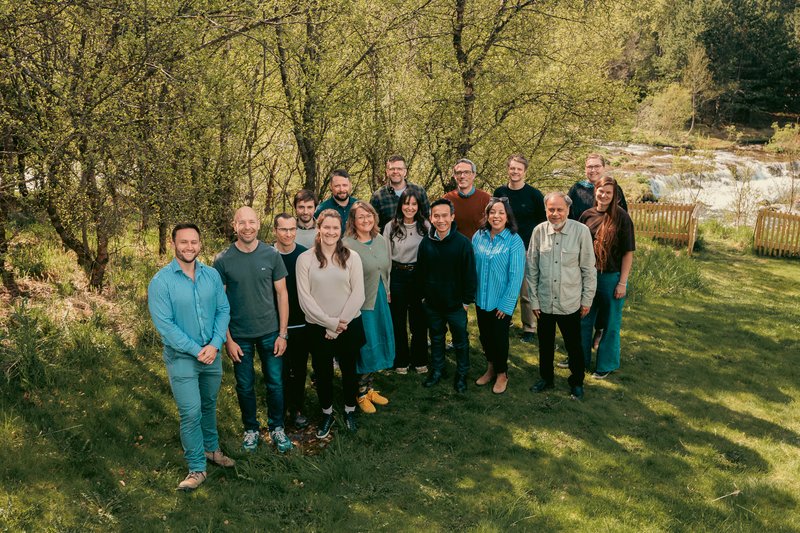
Researchers involved in the COMPASS project reviewed the current status and progress of the initiative.
Researchers Advance COMPASS Project Planning
A diverse group of researchers involved in the COMPASS project gathered on Tuesday to review the project's current status. Planning continued for the upcoming summer research activities, which will take place at ON Power’s geothermal sites as well as in laboratories at the University of Iceland, in Norway and in the United Kingdom.
The companies and institutions participating in the COMPASS project include Orkuveitan, ON Power, GEORG, ÍSOR, TWI, HLC, SINTEF, TVS, COSVIG, and CURISTEC.
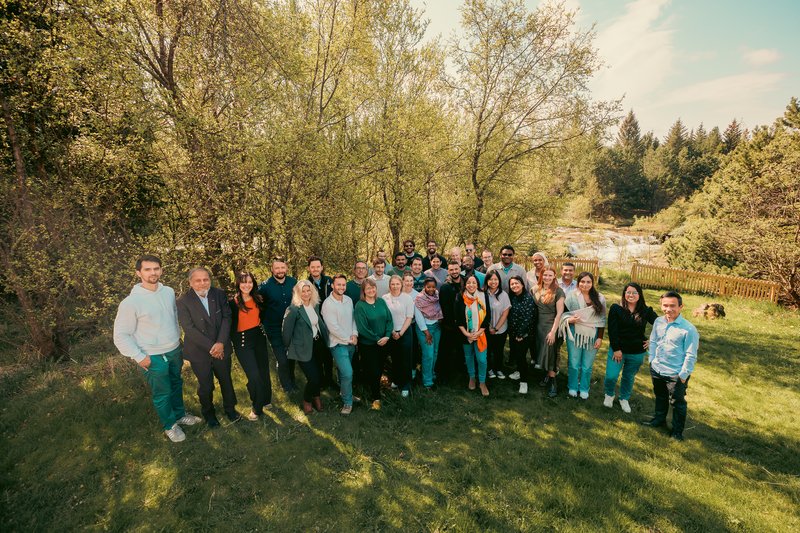
Group of Students and Lecturers at the COMPASS Summer School.
COMPASS Summer School Welcomes International Students
During the week, the COMPASS Summer School also took place, featuring lectures on the project's research topics and introducing the history and purpose of studies on the utilization of superheated geothermal steam. Around 35 enthusiastic students from various parts of the world participated.
The summer school was open to all attendees with a basic understanding of the subject matter. As part of the program, participants toured the Reykjanes Peninsula, observed geothermal surface features, and visited the deep drilling well IDDP-2, hosted by HS Orka. The group was especially pleased with the pizzas at Papa’s in Grindavík.